
How Much Should Custom Cabinets Cost?
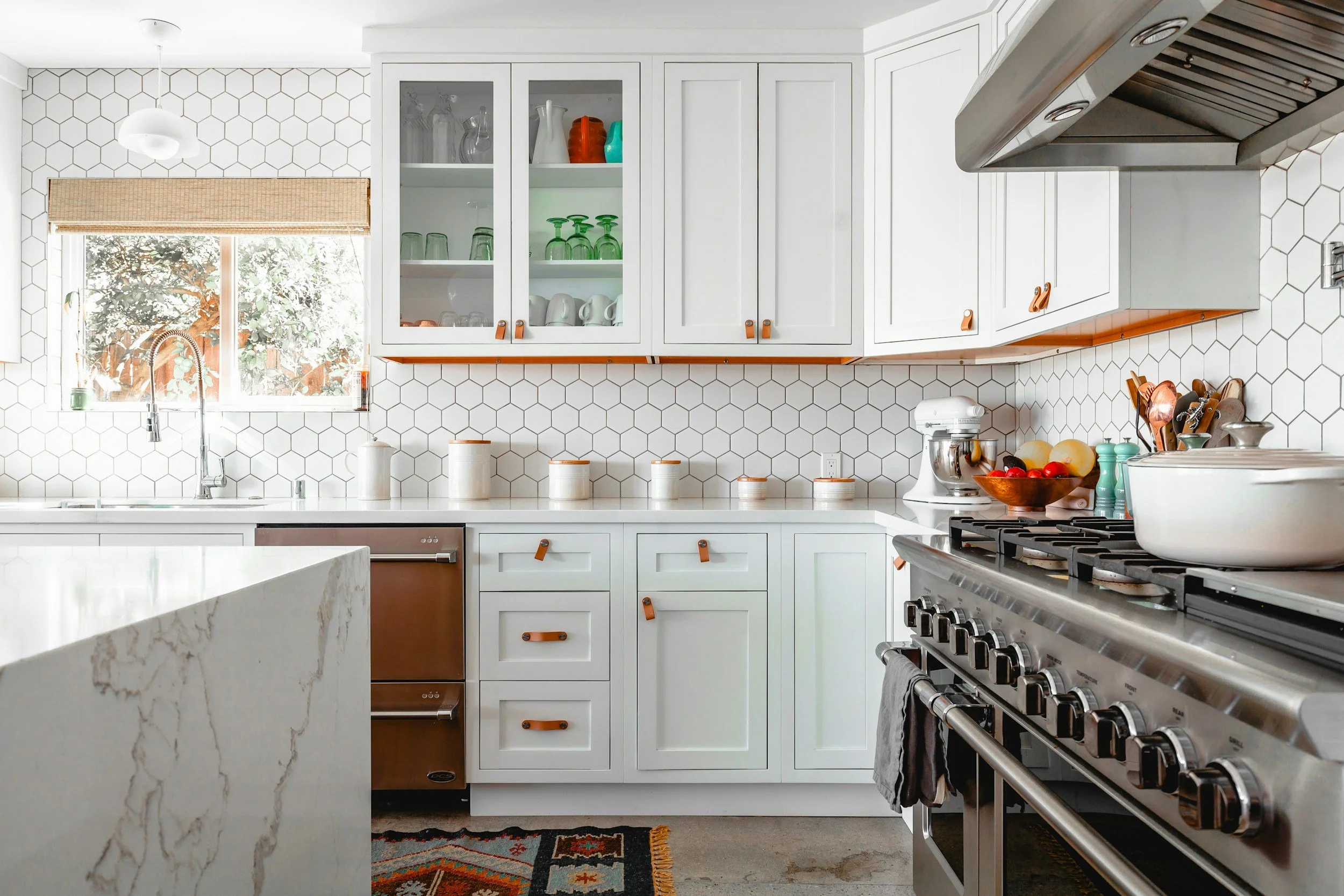
One of the first questions homeowners ask when considering custom cabinetry is: How much should custom cabinets cost?
The honest answer is that it depends entirely on the project.
There is no single price that accurately applies to every kitchen, built-in bookcase, mudroom, vanity, or wall of cabinetry. The cost depends on the size of the project, how the cabinets are constructed, the materials being used, the finish, and the amount of labor involved.
That said, understanding how cabinetmakers price their work—and what actually drives the cost—can help you establish a realistic budget.
How Custom Cabinets Are Priced
For many custom built-ins and wall-length cabinetry projects, pricing is discussed on a per-linear-foot basis.
A linear foot is simply a measurement of the project’s width. For example, a built-in that covers a 10-foot-wide wall would contain approximately 10 linear feet of cabinetry.
Many cabinetmakers develop a general price per linear foot based on their construction methods, material costs, labor, and overhead. That number can be useful for creating an early budget, but it should not be treated as a universal rate.
Two projects that are both 10 feet wide can have dramatically different prices.
A simple frameless cabinet made from prefinished materials is not comparable to a painted, face-frame cabinet with inset doors—even when both projects occupy exactly the same amount of wall space.
What Has the Biggest Effect on Cabinet Pricing?
In my experience, the two biggest factors are:
The cabinet construction method
The material and finish
Other details matter, but these two decisions usually have the greatest effect on the final price.
Framed Inset Cabinets Are Usually the Most Expensive
Framed inset cabinetry is generally the most expensive style we offer.
With this construction method, a face frame is built onto the front of the cabinet. The doors and drawer fronts are then fitted precisely inside that frame rather than sitting over it.
The clearances around inset doors are small and highly visible. Everything has to be built, fitted, and installed accurately for the gaps to remain consistent.
The face frame also adds material and labor. Each opening has to be carefully sized, and every door must be adjusted so it sits correctly within the frame.
The result is a traditional, furniture-quality appearance, but it comes at a higher cost.
Frameless Cabinets Are More Cost-Effective
Frameless cabinets eliminate the separate face frame. The doors attach directly to the cabinet box, usually covering most of its front edges.
This construction method is common in contemporary and European-style cabinetry. It creates a clean appearance while requiring fewer components and fewer labor-intensive fitting steps.
Frameless construction can still be completely custom. The cabinetry can be designed for a particular wall, ceiling height, appliance, storage need, or architectural condition.
Choosing frameless construction does not mean giving up customization. It simply means selecting a more efficient way to build the project.
Why Painted Cabinets Cost So Much
The finish is often one of the most expensive parts of a custom cabinetry project.
A properly painted project requires much more than applying a coat of paint at the end.
Every paintable surface must be prepared. The typical process includes:
Sanding the material
Applying primer
Allowing the primer to dry
Sanding the primer
Applying the first finish coat
Allowing that coat to dry
Applying another finish coat
Completing touch-ups and final quality checks
Every visible square inch must go through this process.
Painting is not only labor-intensive. It also extends the production schedule because the finish needs time to dry and cure between steps. The shop needs finishing equipment, a controlled environment, ventilation, supplies, and enough space to store parts while they dry.
When you combine a custom painted finish with face-frame inset construction, you are selecting two of the most labor-intensive options available.
That is why painted inset cabinetry can surprise homeowners who are comparing it to factory-made or off-the-shelf products.
A Real Custom Cabinetry Example
We completed a large blue built-in bookcase in Medford that is featured in our portfolio.
The project was approximately 10 feet wide. It included painted cabinetry, face-frame construction, and inset doors. In other words, it included the most expensive construction and finishing options that we offer.
The project came in at approximately $1,300 per linear foot.
That does not mean every 10-foot built-in should cost the same amount. It is an example of what a top-tier, painted inset project can cost when it is designed and built specifically for the space.
A more cost-conscious project using frameless construction and prefinished materials can sometimes be closer to $850 per linear foot, depending on the design and scope.
Those figures should be treated as planning ranges rather than guaranteed pricing. Site conditions, interior accessories, hardware, design complexity, installation requirements, and regional labor costs can all change the final number.
The Best Way to Reduce the Cost of Custom Cabinets
For someone who wants custom cabinetry but needs to control the budget, my first recommendation is usually to consider prefinished materials.
Prefinished materials include decorative panels and laminates that arrive at the cabinet shop with their finished surface already applied.
Some homeowners hear the word “melamine” or “laminate” and picture an inexpensive product from decades ago. Modern prefinished materials have come a very long way.
High-quality products can convincingly reproduce the appearance and texture of wood while providing excellent consistency and durability. Some are more resistant to everyday wear than painted surfaces, which can chip or require touch-ups.
Because the material is already finished, we do not have to spend days sanding, priming, painting, drying, recoating, and touching up the project.
That reduction in finishing labor can create meaningful savings without eliminating the benefits of custom design.
The cabinetry can still be built specifically for your room. It can still fit from wall to wall, work around an unusual roof pitch, provide specialized storage, and include the hardware and interior layout that you want.
The primary difference is that we are using a more efficient material.
For many projects, the finished result is shockingly similar to a painted or natural wood cabinet. Most homeowners do not need the most expensive construction and finish package in order to get a beautiful result.
When Does Custom Cabinetry Make Sense?
I often tell clients that custom cabinetry makes sense when custom is needed.
Custom is a good investment when:
You need to fill a specific wall or opening
The room has unusual dimensions
The floor, walls, or ceiling are significantly out of level
You are working around a roof pitch or architectural detail
You need a highly specific storage solution
You want a design that is not available from standard manufacturers
You want the cabinetry to feel permanently integrated into the room
However, not every project needs to be custom.
When standard cabinet sizes will fit the space and provide the look and function you need, purchasing off-the-shelf or semi-custom cabinets from a qualified contractor may be the more sensible financial decision.
A good custom cabinetmaker should be honest about that.
Custom work should solve a problem, improve the use of the room, or create something that standard products cannot reasonably provide. It should not be selected simply because it is the most expensive option.
Are Custom Cabinetmakers Making Huge Profits?
One of the biggest misconceptions about custom cabinetry is that a high price automatically means the cabinetmaker is earning an enormous profit.
That is usually not the case.
Cabinet-grade sheet goods, hardwood, doors, drawer boxes, hardware, finishes, and installation supplies are expensive. On certain projects, direct material and outside production costs can represent a substantial percentage of the total price.
Then there is labor.
A custom project may require site measurements, design work, drawings, revisions, material ordering, milling, assembly, sanding, finishing, hardware installation, transportation, installation, adjustment, and final touch-ups.
Painted inset cabinetry is particularly demanding because it combines precision construction with an extensive finishing process.
The difference between custom and off-the-shelf pricing is not simply additional profit. It reflects a completely different production process.
Off-the-shelf cabinet manufacturers produce the same sizes and components repeatedly in a factory. A custom shop may be building a particular size, layout, or design for the first and only time.
The Future of Custom Cabinet Materials
I believe high-quality prefinished materials will become an increasingly important part of the custom cabinetry industry.
European manufacturers have developed some exceptional products in this category. Materials such as Shinnoki and Unilin Master Oak are already being requested by designers and architects because of their appearance, texture, consistency, and durability.
In many applications, these materials provide several advantages:
No on-site or shop-applied paint finish
Shorter production times
Fewer finishing-related delays
Greater consistency between panels
Excellent durability
Reduced finishing labor
A wide selection of realistic textures and wood appearances
They can also reduce some of the waste, chemicals, and energy associated with repeatedly sanding and coating every cabinet component, although the environmental impact will vary by product and manufacturing process.
As these products continue to improve, I expect more cabinet shops to move away from painting every project.
Painted cabinetry will not disappear. There will always be clients and projects that call for a specific custom color or a traditional painted inset appearance. However, prefinished materials offer a compelling alternative for clients who want custom results without paying for the most labor-intensive finish.
How Cabinetmakers Should Establish Their Pricing
For cabinetmakers who are just getting started, pricing should begin with two questions:
What will the materials cost?
How long will the project take?
Both need to be estimated before sending a proposal.
You need to understand the cost of sheet goods, hardwood, hardware, doors, drawer boxes, finishes, delivery, subcontractors, and installation supplies.
You also need to estimate the hours required for design, purchasing, construction, finishing, transportation, installation, and project management.
Once you have a reasonable estimate of the total cost, you can calculate what that particular project costs per linear foot.
After completing several similar projects, those calculations become useful historical data. You can use them to establish more reliable linear-foot pricing for future work.
However, each shop’s pricing will be different. Material costs, wages, rent, insurance, equipment, finishing capabilities, and local market conditions all affect the number.
A cabinetmaker should not simply copy another shop’s linear-foot rate. The price needs to support that specific business while still providing fair value to the client.
So, How Much Should Custom Cabinets Cost?
As a general example from our own work, a more cost-conscious frameless project using prefinished materials may begin around $850 per linear foot, while a high-end painted, face-frame inset project may be closer to $1,300 per linear foot.
Your project could fall below, above, or somewhere between those numbers depending on its design.
The more important question is not simply, “How much do custom cabinets cost?”
It is:
Which parts of this project actually need to be custom, and which construction and material choices will provide the best value?
For some homes, painted inset cabinetry is worth the investment. For others, frameless cabinets made with a premium prefinished material will deliver nearly the same visual impact at a significantly lower cost.
The right answer depends on the space, the design, your expectations, and how you want to invest in your home.
